Khwaja Khizr, Sukkur
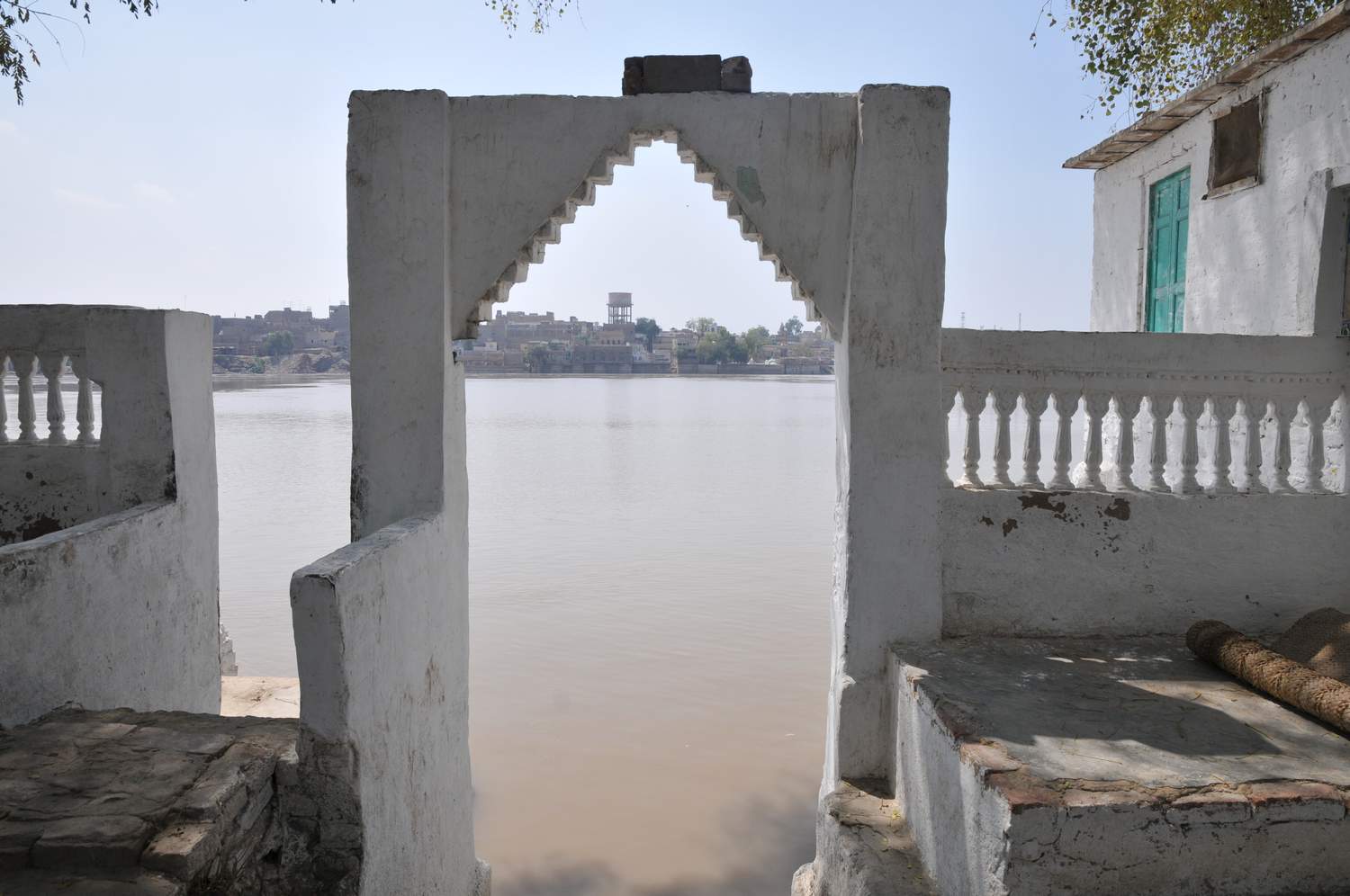
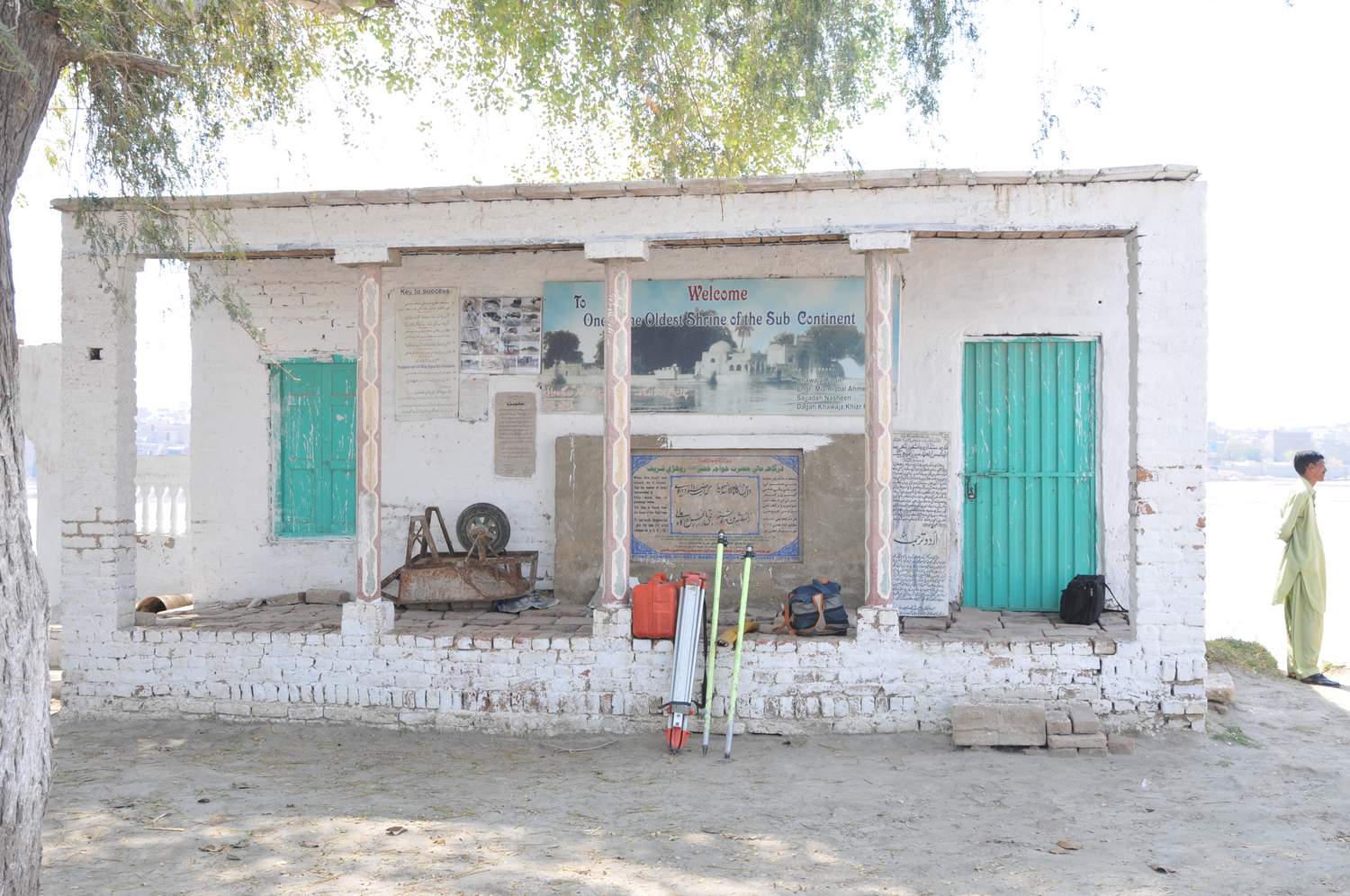
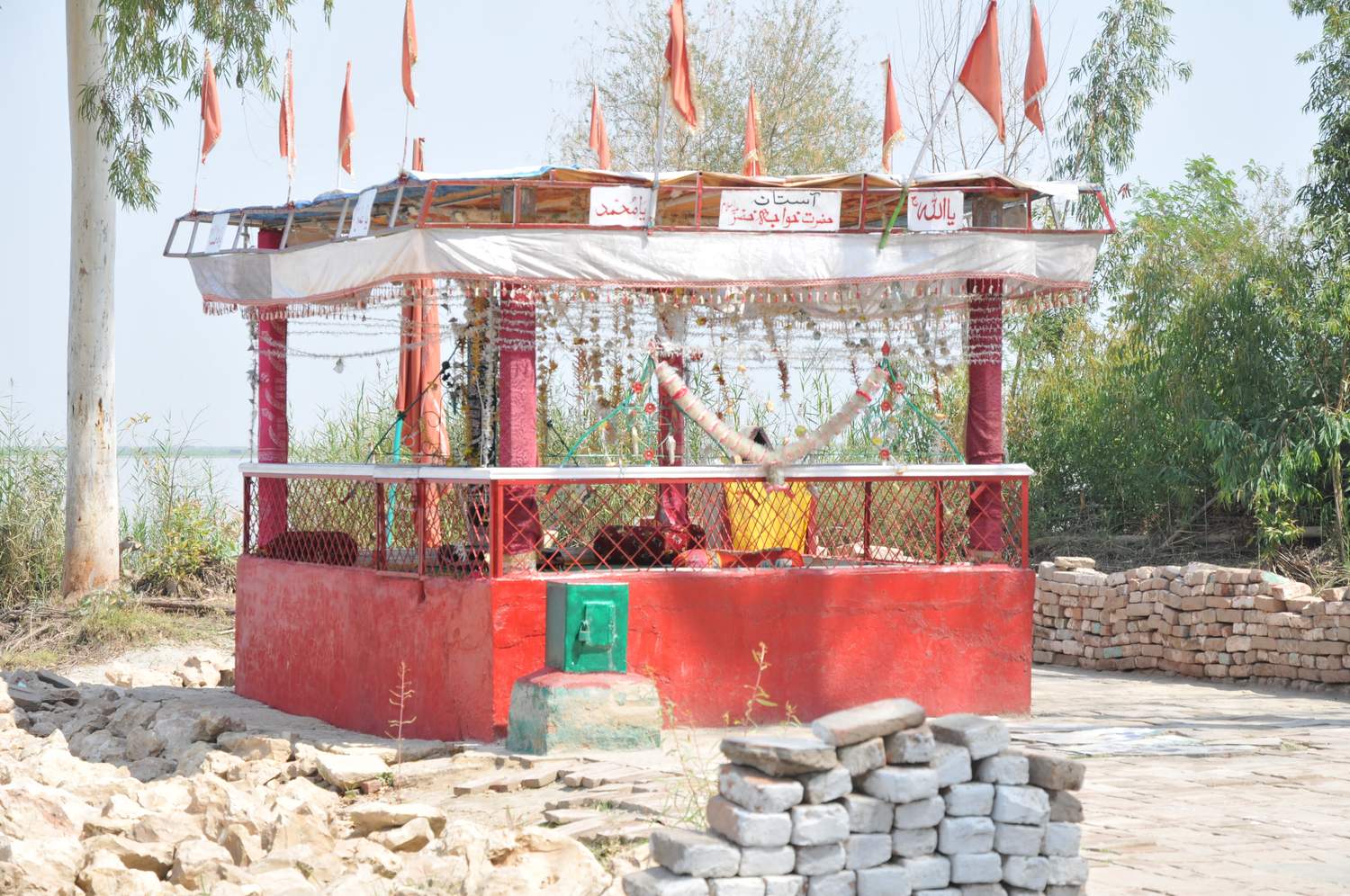
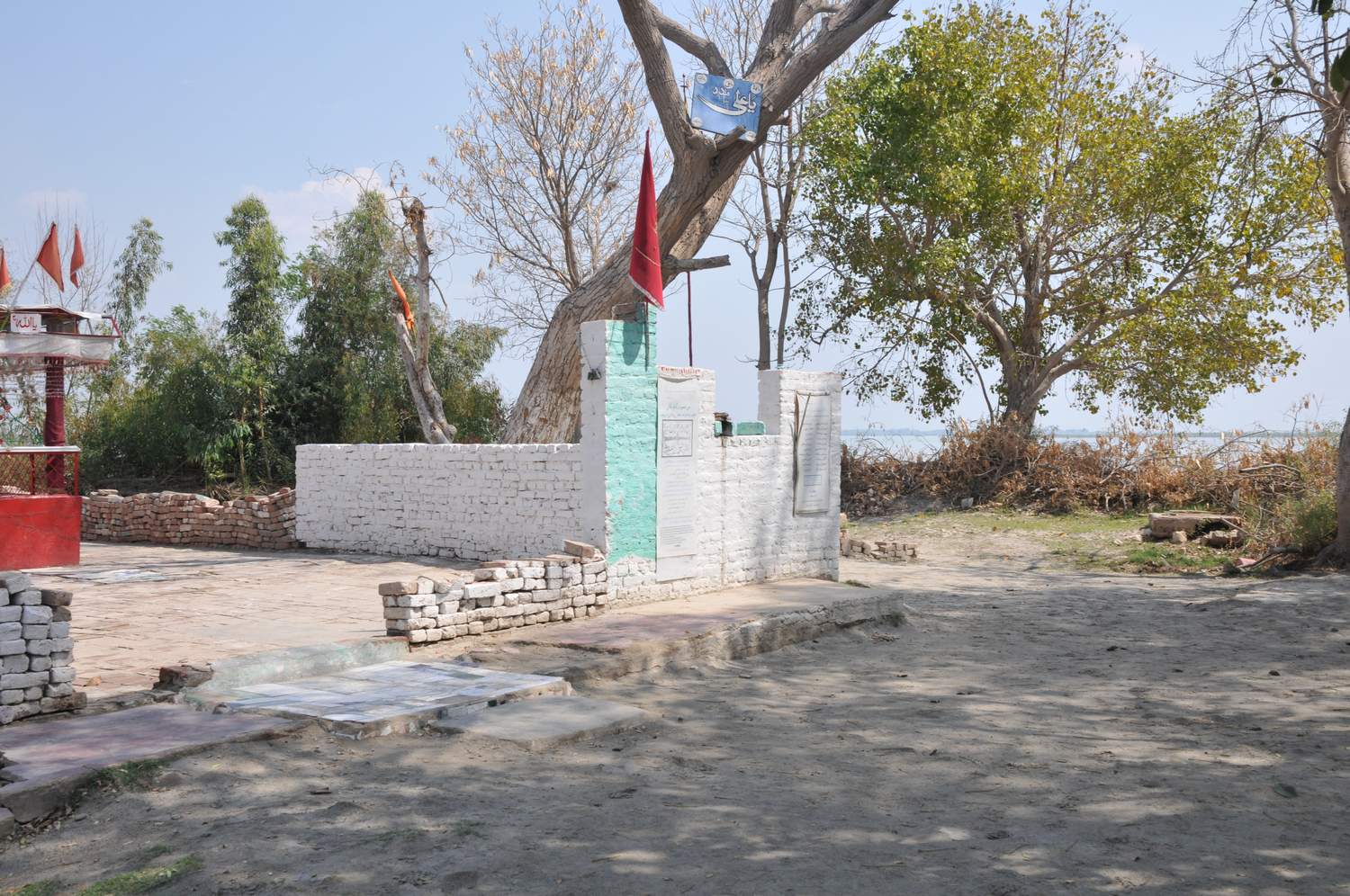
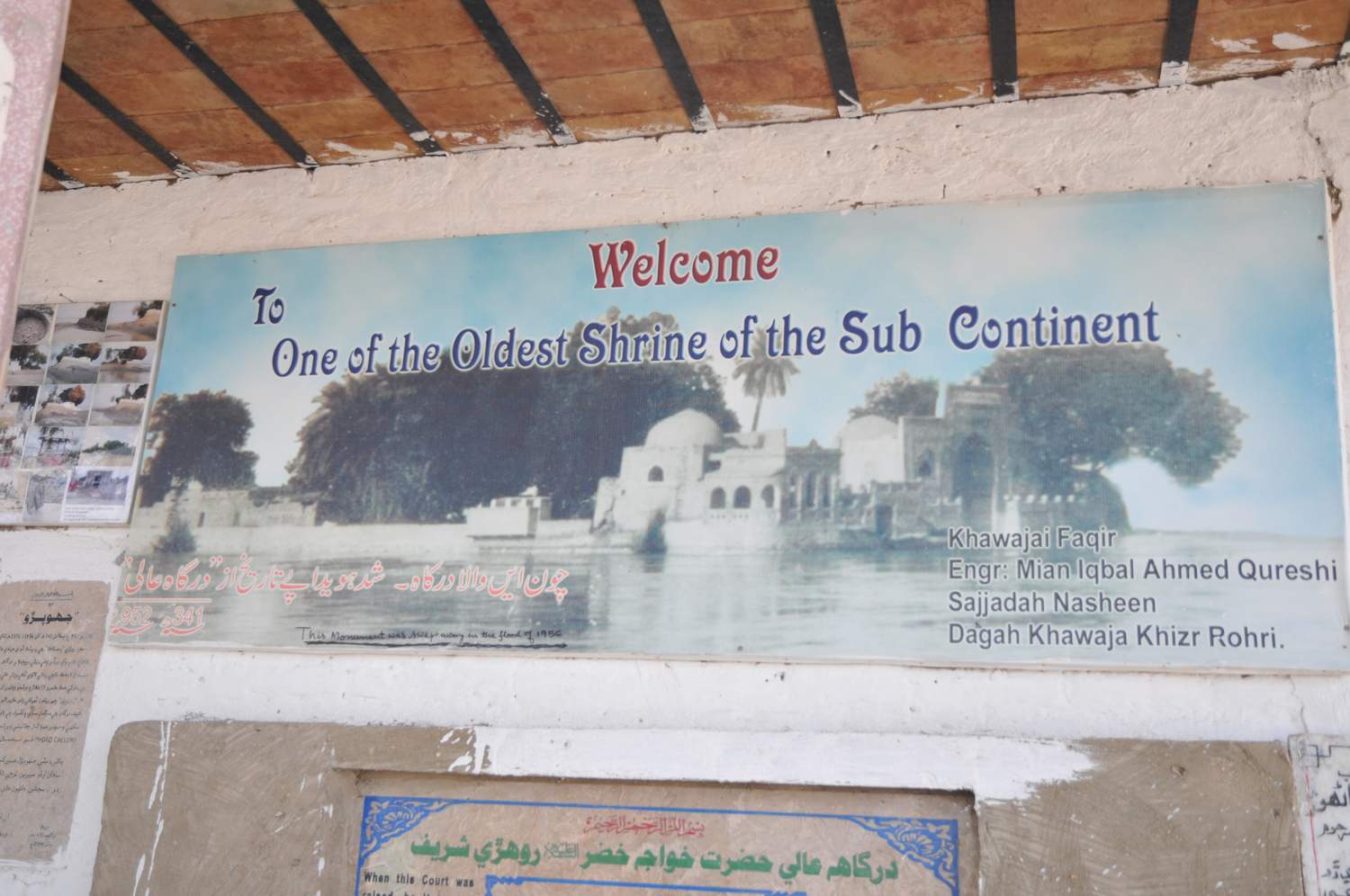
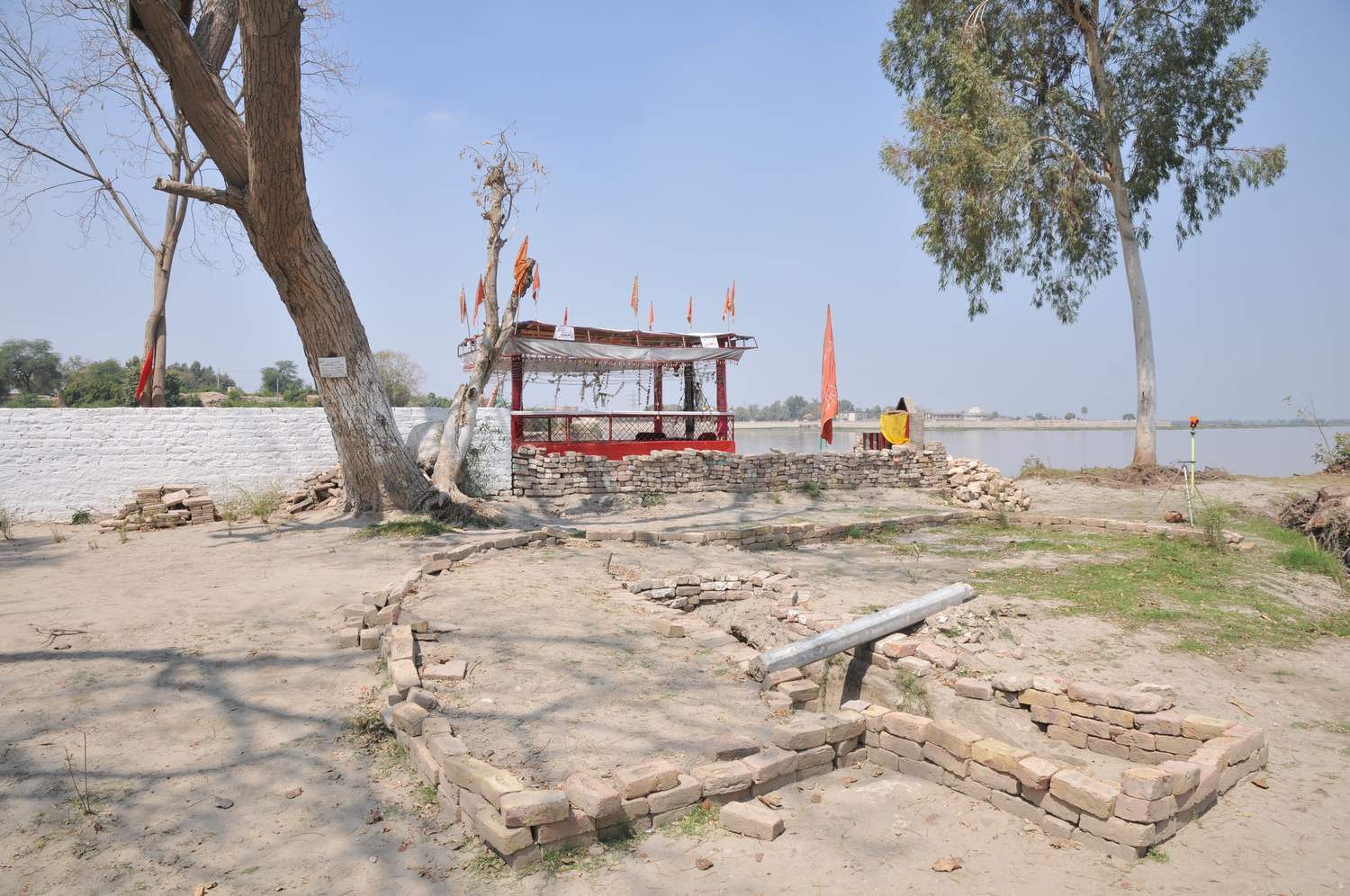
Island shrine of river saint Khwaja Khizr or Zinda Pir, was built circa 925 AD on the island of Hajee ka Tau, north of the Bukkur island fort, Sukkur. There is a a golden tree on the island, offering shade to the tomb of the river saint, Khwaja Khizr. The island can be reached by a short boat ride from Sukkur.
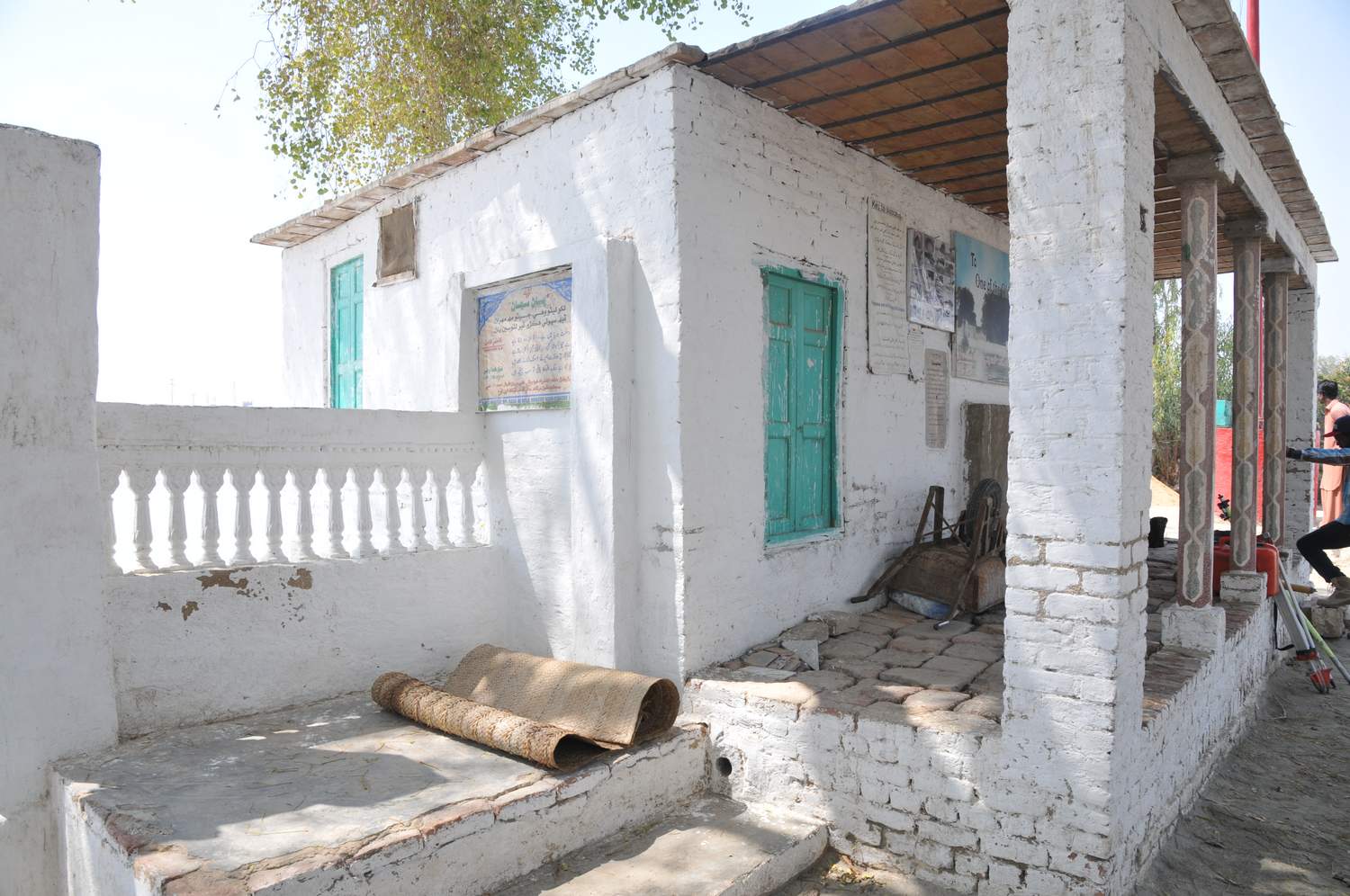
Opposite Rohri is a small island of which about half an acre remains above water at the height of the inundation. This has been enclosed with a wall and contains a shrine to which Muslims and Hindus come together in thousands from all parts of Sindh in March and April. The island has been raised and protected against the corrosion of the river by retaining walls of strong rubble masonry all around. The great gateway facing Rohri is a far more imposing structure than the mean little domed shrine itself. The latter occupies the centre of the island, and is a remarkable plain small square building surmounted by a low dome.
The Muslims honor Khwaja Khizr and the Hindus, Zinda Pir or Jind Pir (Jind is a corruption of Zinda; Zinda Pir means the Living Saint). The possession of the shrine was a bone of contention between Hindus and Muslims, but the matter was settled when the Hindus abandoned their claim and set up a shrine of their own to Jind Pir on the Sukkur bank of the river.
The Muslim legend is that a Delhi merchant, Shah Hussain (Saiful Muluk), traveling down the Indus by boat with his daughter, Badu-i-Jamal, on their way to Mecca. On their arrival in the city of Alore, Daluraj, the Hindu King, who had heard of the great beauty of Shah Hussain's daughter, demanded her in marriage. The King was refused with the reason that it was impossible for the daughter of a Muslim to wed a Hindu. Not content with the reply, the King determined to carry her off by force. As the girl was offering prayers to Saint Khwaja Khizr, the saint directed her father to cut loose the boat. As soon as this was done, the course of the River Indus changed and the stream began to flow towards Rohri, carrying to safety the boat and its passengers. In gratitude for this miraculous deliverance, Shah Hussain resolved to erect a shrine in honor of the saint. In answer to his prayer he was directed to carry out his purpose on a small island a little to the north of Bukkur Island, and here he built a mosque and a mausoleum, in honour of the saint, which in later years was enlarged by wealthy votaries who were said to have covered the door of the original tomb with sheets of silver. Unfortunately there is no trace of either of these buildings. [source]
Images Gallery
Copyright © 2019 · All Rights Reserved · Endowment Fund Trust