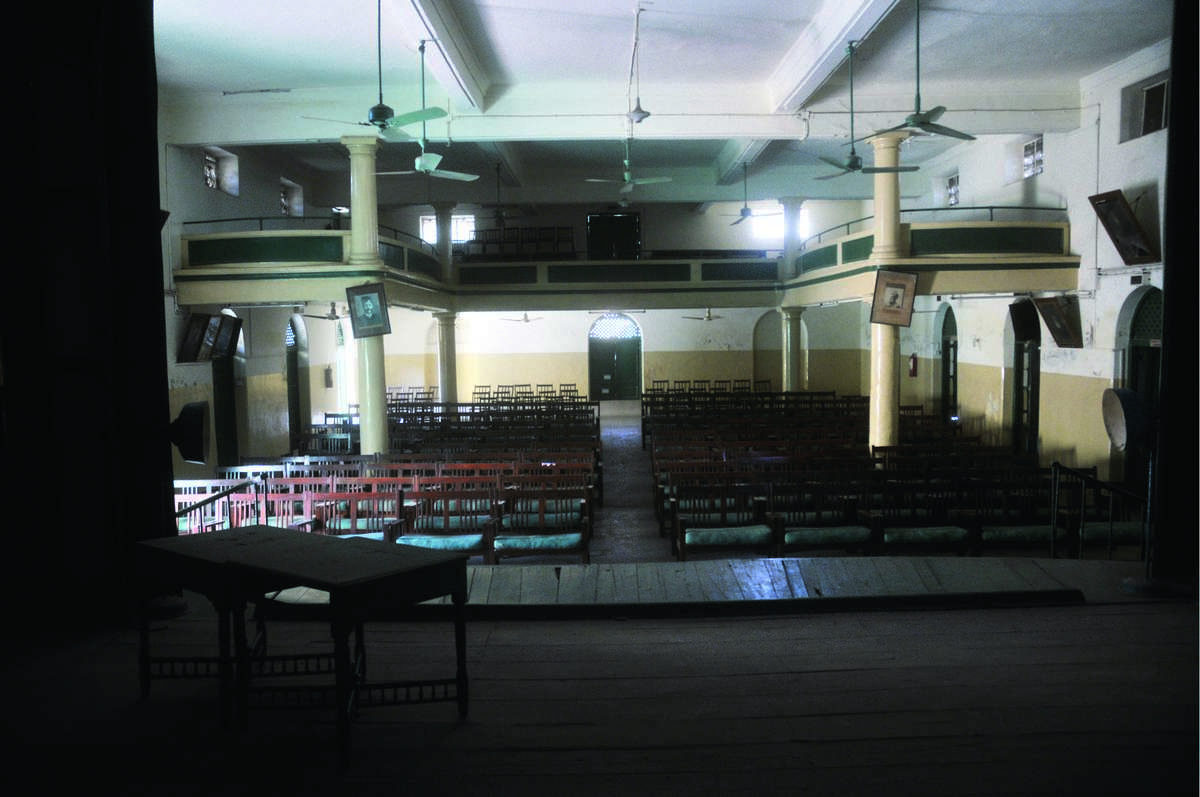
Federico Fellini, Hormusji Katrak Hall, Karachi
Rainbow Centre in Saddar is no more than three decades old. At the peak of the video cassette recorder (VCR) phenomenon (the late 1980s and early ‘90s) this market came into prominence for various reasons, foremost of which was the availability of countless imported VHS tapes, bootlegged or otherwise. From the more popular Bollywood films to the lesser known classic art house cinema of Federico Fellini, it catered to all kinds of movie lovers.
With the advent of CDs and DVDs, it lost its formidable reputation; still no Karachiite would be unaware of Rainbow Centre. Ironically, very few would be able acknowledge a classically built and thoughtfully planned small building in a compound at a negligible distance behind this overcrowded, bustling market. It is Hormusji Katrak Hall.
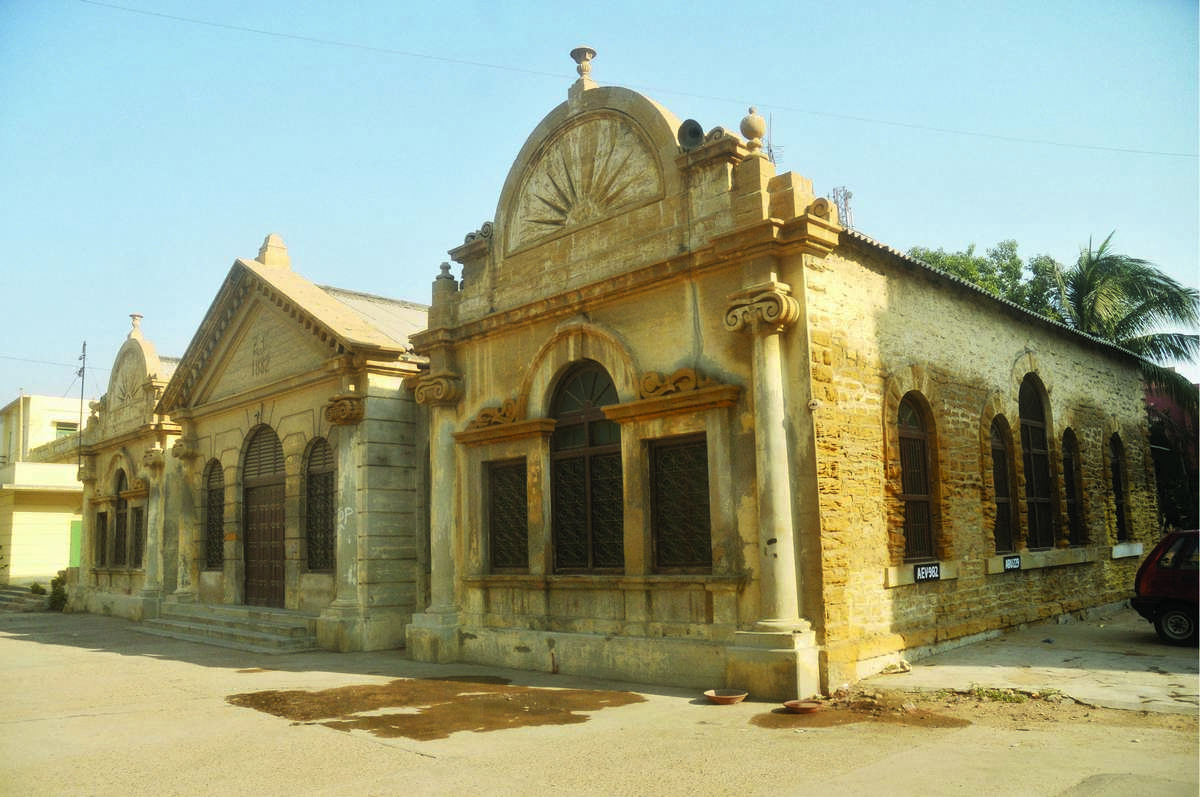
Begin your journey from M. A. Jinnah Road and turn left as soon as you reach Rainbow Centre. It is Katrak Road, and is in a terrible mess. The shoddily set up shops on its both sides do not make for a memorable visual experience. Ignore it. Saddar in the second decade of the 21st century is an area that can only be looked at with nostalgic regret. Keep moving and approximately after a hundred yards or so you will see a gate on your right. The plate on its left side reads: Hormusji Katrak Hall 1920. Move into the compound and to your left you will see the striking Katrak Hall alongside Zoroastrian Club (1882).
The hall’s history is just as gripping as the building itself. In 1910 the Young Men’s Zoroastrian Association (YMZA) was established to organise nataks and other similar forms of entertainment for the Parsi community. A range of fascinating plays were staged at the Zoroastrian Club for the YMZA, for which Sohrab Katrak, Sir Kavasji’s son, used to sign up the Royal Theatre Company of Bombay. A few of Karachi actors also took part in those productions. One play Bap Na Shrap (Father’s Curse) had Sohrab Katrak in the main lead.
When Sir Kavasji was bestowed upon the title of Khan Bahadur by the government for his countless generous acts, his community threw a garden party in his honour where he expressed his desire to offer a generous amount for the construction of a suitable hall for the YMZA to be named after his father, Hormusji Katrak. So on Sept 16, 1919 the foundation stone of the hall was laid by Sir Kavasji Katrak providing the Parsi community with their own theatre.
The venue has seen many a great play being produced for an assorted audience. It would be interesting to know that playwright Khwaja Moinuddin’s historical social satire Mirza Ghalib Bunder Road Per was first performed at Katrak Hall in 1956. And it is understandable why it would be one of the favoured places for arranging such events.
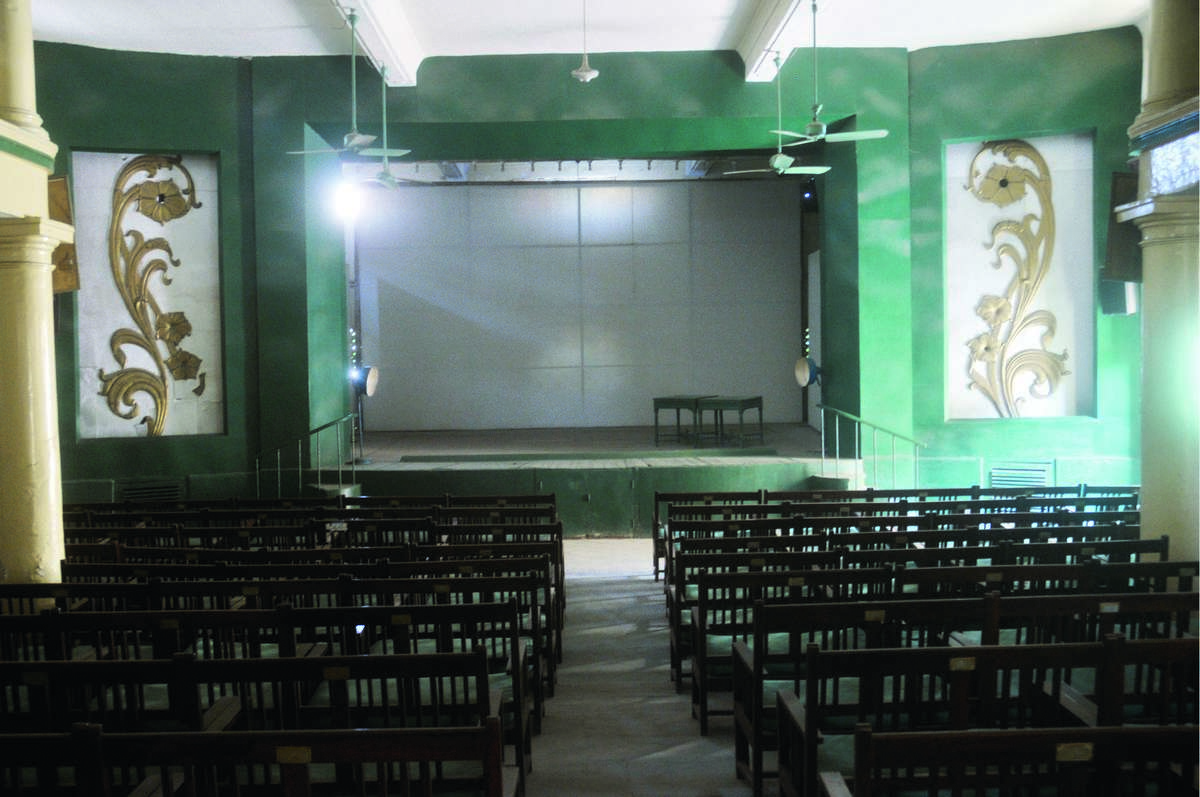
The hall has a spacious stage, with a tastefully scribed floral pattern made of wood on both sides of the apron. The two seater benches, which were presented to the YMZA Karachi by the trustees of the late M. Edulji Khory (London 1924), lend a distinct look to the seating arrangement. Black and white pictures of the individuals who contributed to the construction of the structure and to the YMZA adorn the walls.
[Source: Karachi Legacies of Empires by Peerzada Salman | Coordinates: Talha Nasir]
Images Gallery
Copyright © 2019 · All Rights Reserved · Endowment Fund Trust