Karachi Port Trust (KPT) Building , Karachi
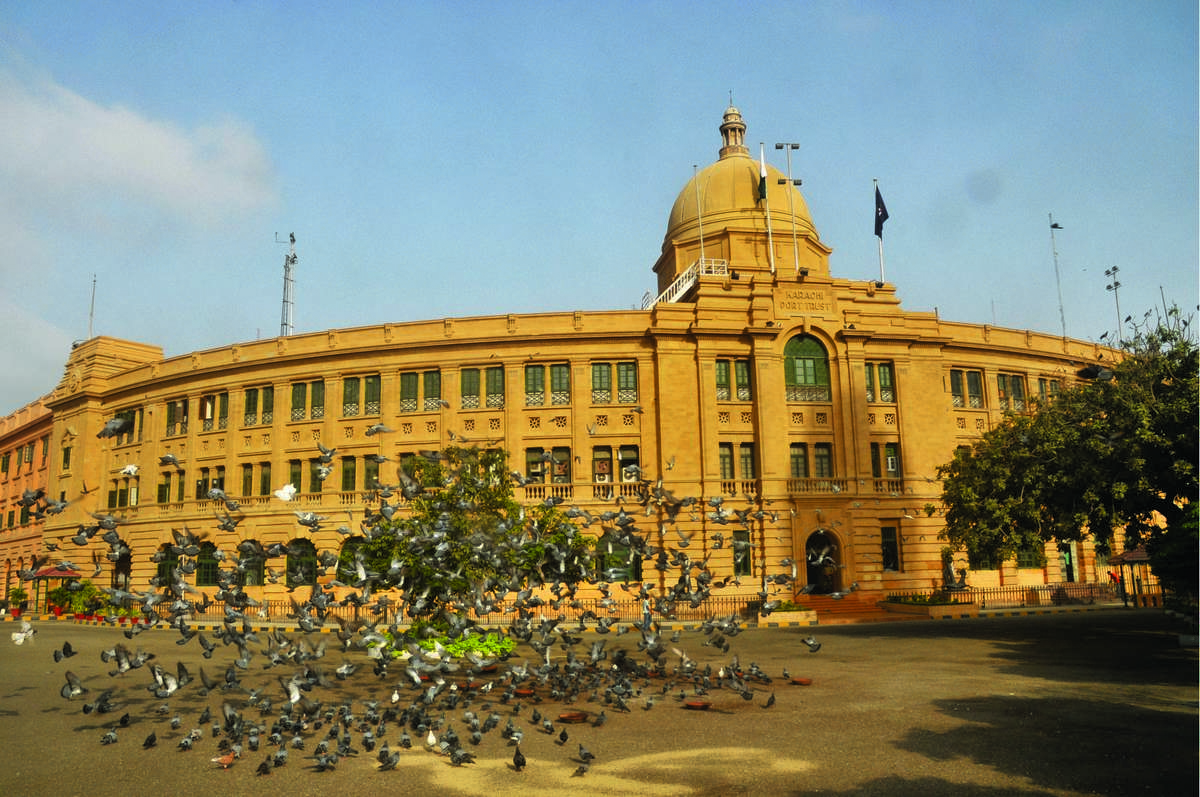
The Port Trust building was designed by George Wittet, the consultant architect of Bombay (now Mumbai) in the early part of the 20th century. At the time of its construction (1915-16) it was considered, along with the Science College Bombay, the most important building in the subcontinent. Wittet was also the architect of the Prince of Wales Museum or the Gateway of India (1908). While those pieces were of the Anglo Mughal variety, Wittet made the Port Trust workplace with a ‘rusticated arcaded ground floor and repetitive window bays on the upper storeys'. It is said the building was designed in a general Renaissance style but some features representing Georgian architecture could also be witnessed in the making of the ground floor.
One other interesting bit of information is that during the First World War (actually from 1916 to 1919) the Port Trust offices were converted into a 500 bed hospital. Given the enormity of its size, it would have proved quite helpful. But not much is known about that aspect of its existence.
These days the janitorial services have been outsourced by the KPT authorities, a method which seems to be working fine. But do those who visit this historic place on a daily basis realise that they work in a building that is part of our national heritage? After all they say no one is a hero to his own valet.
The vastness of the KPT building is awe inspiring. So too its architecture, particularly when viewed as an overhead shot from the road network that crisscrosses the area. It's a new, forward looking Karachi. But the harbour is as really old. And the combination of a well-protected past and a well-thought-out future is always worth cherishing.
[Source: Karachi Legacies of Empires by Peerzada Salman]
Open in Google Map: 24.847338283823, 66.9930998502135
Images Gallery



Copyright © 2019 · All Rights Reserved · Endowment Fund Trust