Chaukandi Tomb, Karachi
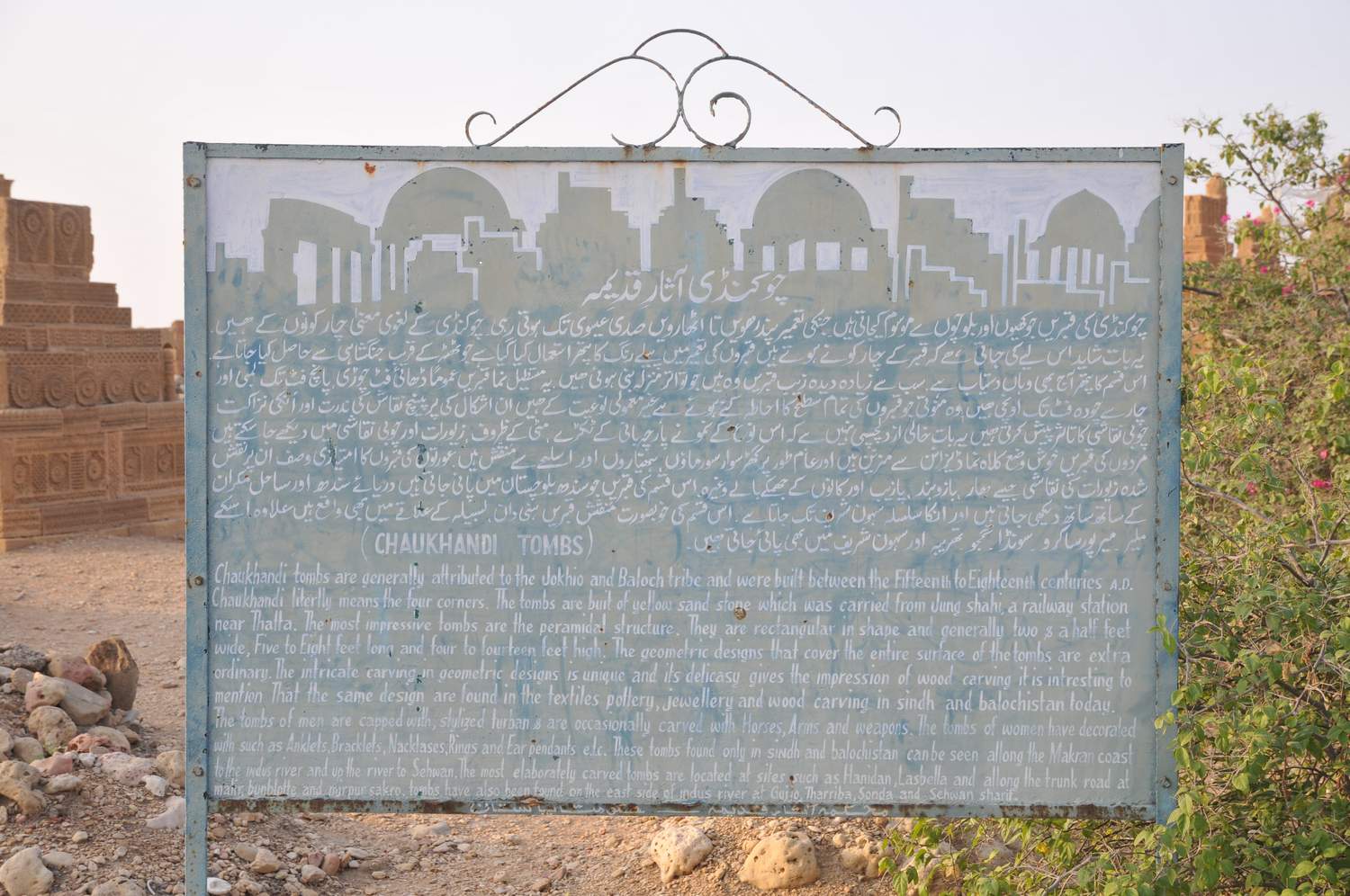
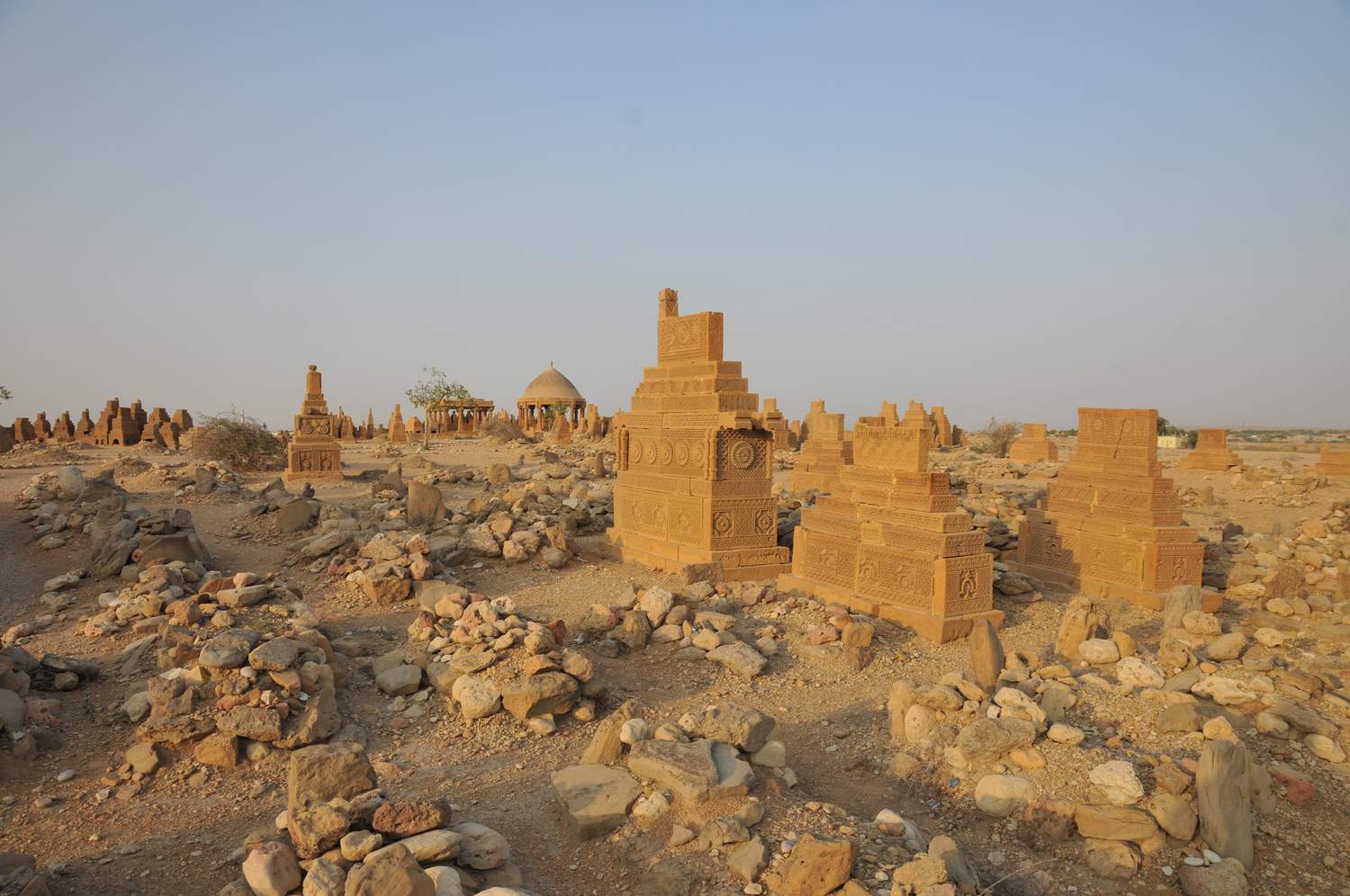
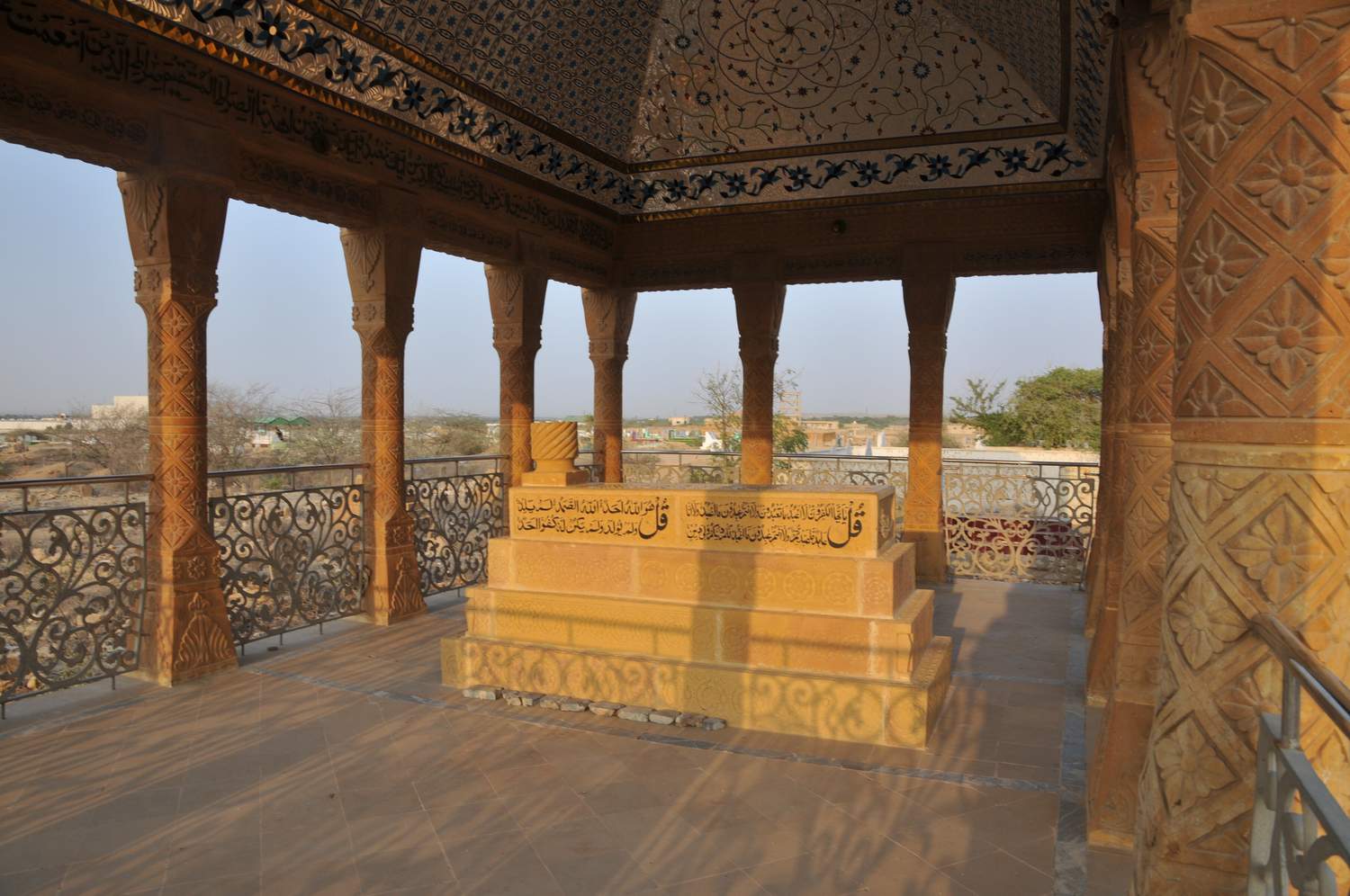
The Chaukandi tombs form an early Islamic cemetery situated 29 km (18 mi) east of Karachi, close to the N-5 National Highway near Landhi Town in Pakistan. The tombs are remarkable for their elaborate sandstone carvings.
The style of architecture is typical to the region of Sindh. Generally, the tombs are attributed to the Jokhio (or Jokhiya) and known as the family graveyard of the Jokhio tribe. However, other tribes - mainly Baloch - have also been buried here. The tombs were mainly built during Mughal rule sometime in the 15th and 18th centuries when Islam became dominant.
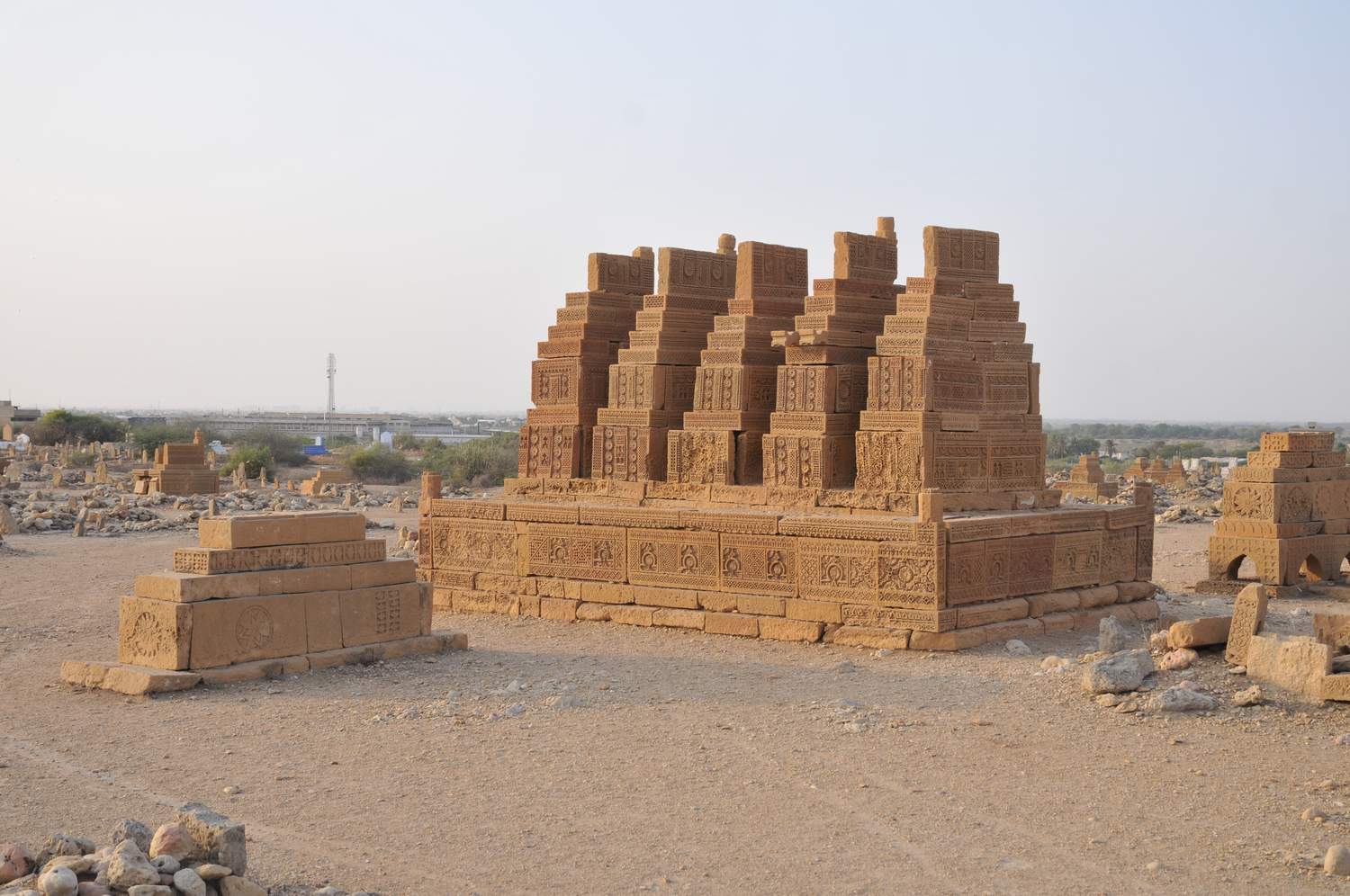
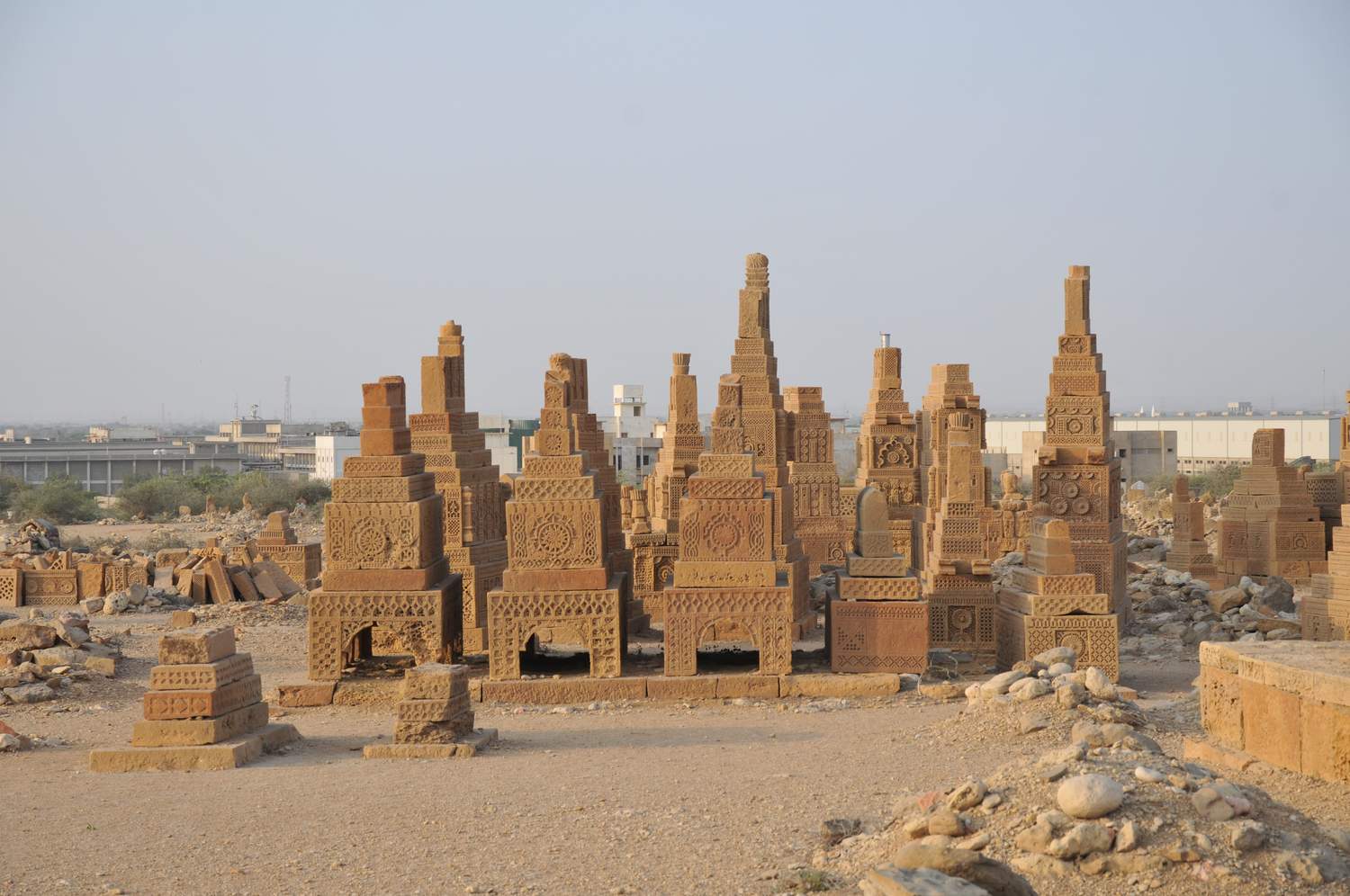
This type of graveyard is remarkable because of its main north-south orientation. The more elaborate graves are constructed with a buff-colored sandstone. Their carved decoration displays expert craftsmanship and has often kept remarkably well over time. Tombs were constructed either as single graves or as groups of up to eight graves, raised on a common platform.
A typical sarcophagus consists of six vertical slabs, with two long slabs on each side of the grave indicating the length of the body and the remaining two vertical slabs on the head and foot side. These six slabs are covered by a second sarcophagus consisting of six more similar vertical slabs but smaller in size, giving the grave a pyramid shape. The upper box is further covered with four or five horizontal slabs and the topmost construction is set vertically with its northern end often carved into a knob known as a crown or a turban. The tombs are embellished with geometrical designs and motifs, including figural representations such as mounted horsemen, hunting scenes, arms, and jewelry.
[Source: Discover Pakistan | Coordinates and Photographs: EFT]
Open in Google Map: 24.8664218, 67.2740099
Images Gallery

Copyright © 2019 · All Rights Reserved · Endowment Fund Trust